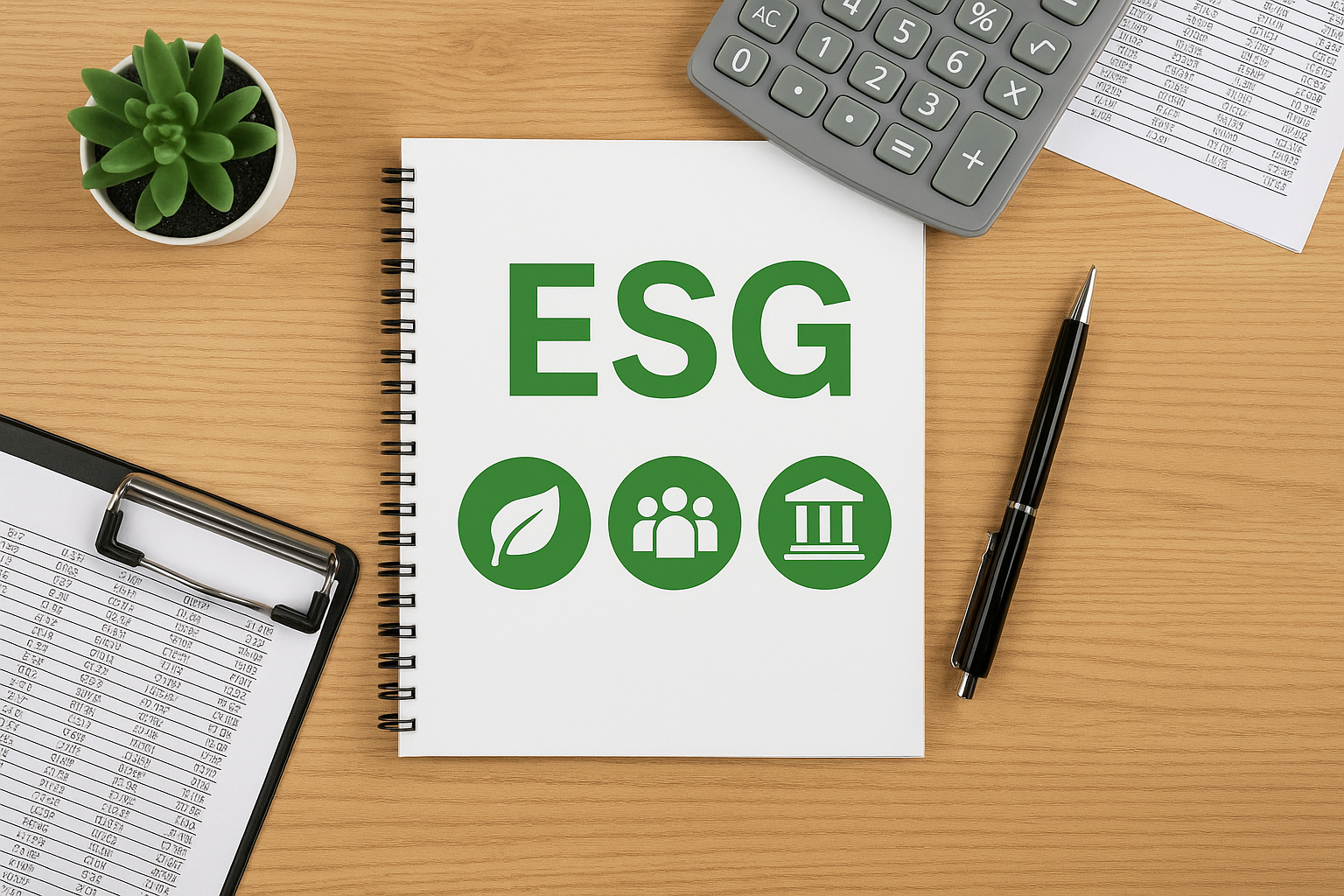
ESG Compliance in Accounting – A New Standard of Transparency
Environmental, Social and Governance (ESG) standards are rapidly transforming the way companies in Switzerland operate, report, and manage risk. Markets, banks, and investors increasingly expect businesses to demonstrate responsible leadership—and ESG compliance in accounting is a critical part of this shift.
For Swiss companies, ESG is no longer a voluntary initiative. It is becoming a defining factor of long-term stability, access to financing, and overall market credibility.
What ESG Means for Today’s Accounting Practices
Traditional accounting focuses on financial metrics. ESG expands this to assess how responsibly a company is managed.
Environmental Criteria
Carbon emissions, energy usage, waste reduction, and resource efficiency.
Social Criteria
Working conditions, employee safety, fair pay, diversity, and community involvement.
Governance Criteria
Board accountability, transparency, internal controls, ethical standards, and compliance policies.
To learn more about global sustainability expectations, consult the OECD Sustainability Disclosure Guidelines:
Why ESG Is Becoming Essential for Swiss Businesses
1. Shifting Regulations and Market Expectations
Switzerland is aligning with global sustainability frameworks. Large companies must already disclose non-financial information; SMEs are increasingly affected by supply-chain obligations and client requirements.
2. Investor and Banking Requirements
Banks and investors now examine ESG practices to evaluate risk and long-term viability. Companies with strong ESG reporting enjoy:
- Better financing opportunities
- Increased trust
- Reduced risk exposure
- A stronger reputation
3. Improved Strategic Positioning
Companies that embrace ESG can differentiate themselves by demonstrating credibility, transparency, and future-oriented leadership.
How ESG Impacts Accounting Workflows
More Comprehensive Data Collection
Companies must monitor non-financial indicators—environmental performance, HR metrics, and governance structures.
Enhanced Risk Identification
ESG considerations reveal operational, reputational, and regulatory risks not previously captured in traditional accounting.
Integrated ESG Reporting
ESG transparency is increasingly included in Swiss annual financial statements and corporate disclosures.
Better Internal Governance
ESG readiness requires clear processes, reliable documentation, and transparent reporting structures.
Is ESG Relevant for Small and Medium-Sized Companies? Absolutely.
ESG expectations affect SMEs through:
- Bank due diligence
- Client and partner requirements
- International business relationships
- Employee-driven expectations for responsible employers
Adapting early ensures long-term competitiveness and trustworthiness.
How DeinDomizil Supports ESG-Oriented Business Structures
DeinDomizil helps businesses strengthen governance and transparency—key components of ESG expectations—by offering professional corporate services and compliant business infrastructure.
Our services include:
- Swiss Domicile Address – A reputable and transparent business address in Switzerland
- Company Formation – Build your company with a solid legal and compliance foundation
- Titular Managing Director – Strengthen governance with an experienced Swiss director
- Accounting Services – ESG-aligned bookkeeping and transparent financial reporting
- DeinDomizil Home Page – Explore all services and business solutions
These services help you establish a compliant, trustworthy, and professionally managed business environment—crucial for ESG-aligned reporting.
Conclusion: ESG Is Redefining Corporate Accounting in Switzerland
ESG compliance is becoming a central part of responsible corporate management. Companies that integrate ESG principles into accounting gain increased credibility, improved access to financial resources, and a stronger market position.
Preparing now ensures that your business stays ahead of evolving expectations, regulations, and global standards.
📌 Contact DeinDomizil
DeinDomizil
Blegistrasse 7
6340 Baar, Switzerland
Phone: +41 (0)41 410 61 61
Email: info@deindomizil.ch